
I HAVE NEVER BEEN AFRAID OF UNEXPECTED THINGS - INTERVIEW WITH ZOLTÁN BALÁZS
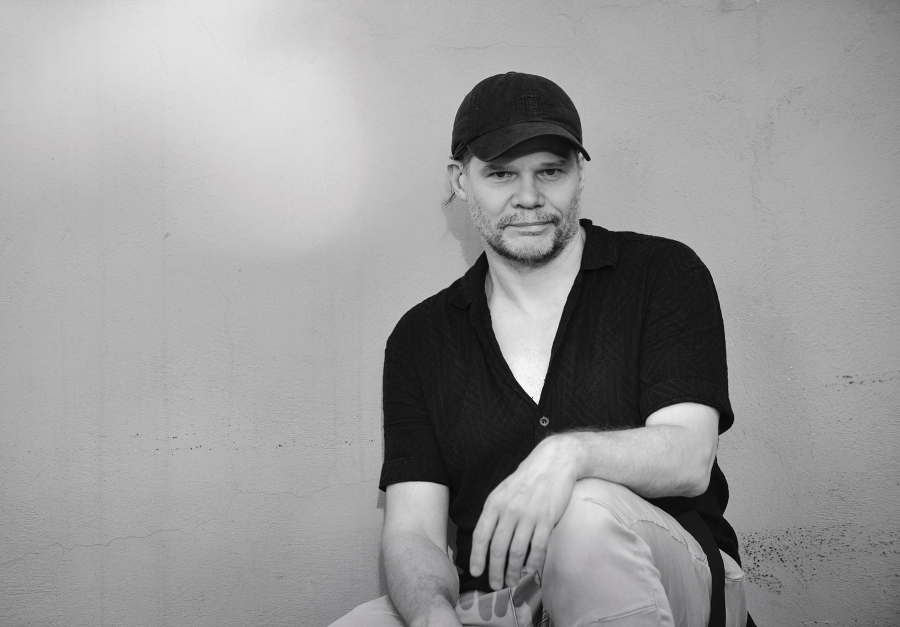
Maladype Theatre was founded 25 years ago, which has become well known and appreciated soon. Through some years they have built up their international connections and after a while they have performed more abroad than in Hungary. Has it broken your drive that you have a base again here in Hungary?
I have not got that kind of base, which was the previous performing place of Maladype on Mikszáth Square, but the artistic management of METTRIN and the coordinating tasks on the course of directors of the newly organised Institution of Theatre-, Film and Dance Art on the Faculty of Arts of University of Pécs, have given a drive to my presence at home. The centre of arts by the Lake of Bánk can offer great amount of possibilities for international connections, the tasks as a programme leader and head of department, which is built of the methodical programme of FIVE GATES, can give the cross-section of my experiences, I have gained in Hungary and abroad. I inherit the energy, which is needed for the drive, mostly from my mother, but other members of my family have dynamic enough personalities. They tried to make their lives impossible in the communism many ways, they could always hold on, and for me this has become the model. Also their sense of humour. They could laugh honestly on the impossible things of the world. I tried to use this positive attitude at the age of twelve too, when I lost the country, where I got all good things up to that time, the wonderful nature, the caring family, the first friendship and love... I compensated the loss that suddenly happened that I hitchhiked Europe back and forth and I practiced the adaptation to different situations. Maybe that is the reason, why changing cannot pull me back, but inspires me instead. I accepted the management in Bánk, the director course in Pécs with pleasure, and if it had happened that way, I would have accepted the tasks of a main director of the Opera House too with Andrea Rost’s management.
Was it an option too?
When Andrea decided to apply for the position of the manager of the Opera, she asked me to be the art director, which I felt very honourable and motivating. I said happily yes for the invitation. If we had got the possibility to carry out our ideas, which were in our application, I would have returned to live in Hungary with pleasure. As in case of METTRIN, also in case of the Opera House I have found important to activate the international network of contacts and to make possible the continuous presence on international stages too. As it comes from the history of Maladype, I believe that for the Hungarian directors and performers it can be very useful if they can measure their knowledge in other theatrical cultures and if they can share their experiences, which they have gained there, with the others in their own surroundings. Those new kinds of encounters, which can happen on events abroad, can also inspire the viewers and professional ones in Hungary a lot.
Can METTRIN be seen as a rebirth? How many are the new things in it and those, which you carry on from your previous projects?
METTRIN could provide me decent conditions to return home. It offered those kinds of possibilities of thoughts, structure and financial, which were missing from the previous invitations. In the centre of Bánk, we mostly concentrate on new projects.
I see it, but at the same time Maladype has mostly performed on international stages, on festivals abroad, in co-operation with foreign theatres for the last twenty-five years. This rootlessness can form its system, which you leave behind now.
We do not need to leave it, as Maladype remains the part of international theatrical world, our performances of repertoire travel around and we create new co-productions. In Hungary The Suit, in METTRIN, The Penelopiad in Eötvös10, The Puppetmaster in the Csokonai National Theatre can be seen. The Alice in Bed is performed in SARTR Theatre in Sarajevo, the Inhuman in Bekim Fehmiu Theatre in Prizren. All our performances have its own permanent performing place, but they are regularly invited to different festivals of the world. We take much care not to mix the different brands.
Is there anything, which you would have been able to do 15-20 years ago, but it has already lost its validity and you have a sense of lack because of it?
There is not any. If I decided something, I would fulfil it obsessively. I was almost always before myself, I was driven by curiosity. I did everything not to preserve previous results and not to repeat the already used formal-substantive units. I strived for the variety to mean the main attraction of Maladype, to be able to surprise the viewers again and again with our performances.
But it means, that you always have to keep your restless nature in condition, and let space for the unexpected impulses.
I have never been afraid of unexpected things. I have had desire for unexpected encounters and I have tried to get myself into adventures. I have found recently one of my old writing, in which, I explained to Ramóna, my love, what kind of experience I had at a night during hitchhiking. I was about to have a rest in a park, when I noticed, that the bush was moving nearby. I did not know if it was an animal or a Human being, then a homeless person appeared. I thought immediately, that he would kill or rob me, but he just asked for a cigarette. I offered him one and we started speaking. He told me how he became a homeless, that between what kind of conditions he used to live as child, how did he get into prison and for what he felt responsibility the most. We were talking as we would have known each other for many years. When I was about to leave he told me: “Hey, man!”. I thought that he would kill me anyway. “Have you got any children?” – he asked. “No, I have not”, I said. “You will be a very good father...” – he answered and then disappeared. It was a huge lesson about our prejudices. I have many stories, which can be examples later in the phases of my life, which have proved to me, that I made it right when I chose the more hazardous, the bolder one. Of course, there are those, for whom I am too dangerous and unpredictable.
And have you made peace with it?
Sooner or later we will make a peace with our nature. The most important thing is that we want to get closer to ourselves. I enjoy my own company, my flashing ego, but I like watching people and understanding their behaviours. With the understanding of those reactions, which cannot be explained at once, I can see my own defects differently. I can appreciate a lot, if somebody can take care of his surrounding, if in case of rainy weather he rises his umbrella up above the other one, passing by, if he does not get on the crowded tram with the rucksack on his back, or if he uses the electric scooter properly. I especially appreciate those offers, which have innovative purpose, which can make our life more beautiful and easier. The situation is the same in case of the automatisms of theatre art. I try to understand that why do most of the performers insist exclusively on Hungarian patterns and why are they averse to exotic impulses. The theatrical reformation cannot work without the knowledge and transposition of different cultural traditions. In order to avoid insularity I have always left some space for some kind of cultural characteristics in my performances, for example, for the Indians of Vancouver or for the intellectual heritage of the Cyclades. The burst of Maladype was certified by the teamwork between Gypsy and non-Gypsy actors, by their uncial breathing together on the stage. The inspiration from the Gypsy culture has not only characterized the early years of Maladype, but it could mean the reconsideration and some kind of fertilization of Hungarian theatrical traditions too.
Do you have the aim to educate with theatre?
In the past, this educator of the people worked intensively in me, nowadays not so much. In Hungary, we were the first ones, who have opened the rehearsals of King Ubu for those, who were interested in our creating work, from the reading of it until the premier. During this rehearsal period, which I led, the actors revealed themselves with brutal honesty to the viewers, who had active roles during the evenings. This extremely risky try was followed by great success finally, the performance was played more than hundred times in Hungary and abroad. But before it there were articles in which, they wrote down that Tamás Ascher and Zoltán Balázs hit the viewers.
Have you done it?
Unfortunately, yes, I have. Sometimes I gave cuffs to some viewers or I took away their bags. I was deeply outraged by their careless behaviour, which could degrade the concentrated artists. Later I realised, that the “saint art” cannot occupy at once everybody, and we have to work for the viewers’ attentions. The experiences, which I have gained that way, make me realise that it is not enough if you are out of the system, but you should create your own system, to which we can get those viewers closer, who would like to get involved in, with the gradual introduction of a meticulously worked out method...
From these you are not seemed to be one, who avoids conflicts. How can you make your actors accept it? Meanwhile, you have been created in different cultures, it can mean many plus tensions. Has it ever happened that someone left it? And if yes, how did you react on it?
Basically, I have positive experiences, but as in case of any evolutionary processes, there have been many losses before our successes. There have been actors, who left the troupe, because they got afraid of the realisation, that they got too close to themselves.
Is not it too easy to tell that “they got too close to themselves”? Cannot it happen that they got afraid in reality?
I had to accept that my trials to cross the borders, could not become personally motivated for everybody. There were some, who would not have liked to put his own experiences on a character’s problem, they would have hidden behind the characters instead. The Hungarian language tells that: they acted a part. Anyway, this type of art is far away from me. Mari Törőcsik made a difference between two types of actors: one of them have a work to do on the stage between seven and ten, for the other one, the desire to be liked and the appreciation are the most important. I prefer the first one.
In case of the choice of the topic, how much you are effected by the surroundings? Does the fact have any additional values, that where you perform?
Of course, it does. The given surroundings have always effected the choice of the topic, the formal performance. I can perform anywhere, I always try to think about the world as a universal artist, and the dilemmas in the plays, I would try to see and present universally. Maybe, that is why, our performances can be compatible with different theatrical cultures, societies. We do not build on didactic, obvious messages, but on symbols, allegories, metaphors.
Where do you see your place in the contemporary Hungarian theatrical world? You have passed the young titan at the age of twenty. Have you managed to get onto another shelf, after you have been so innovative and experimental?
The shelf is different, but the attitude is the same. The prototype of the avant-garde artist, who brakes the conventions, has remained.
According to you, where is avant-garde today?
Its meaning? Its function? Or its aim?
All of them together! I am looking for avant-garde, but for example, the Robert Wilson-like avant-garde I cannot find anywhere.
Try to find it, where the spirit of experimentation is presented. However, the avant-garde artists original aims were mostly to concentrate on the breaking of traditional norms with the surprising elements, in a strange way I can see the present tense validity of the movement in connection with the creation of pure spirited performances. In that kinds of fulfilments by artists, where not the bluff and chaos are dominant, but those new contents and techniques that can support the viewers’ thinking. The form always has to follow the function. We should not reach the rise of attention towards some topics with fashionable tricks, which can be seen in video clips. Once or twice, it can be effective that a purple cow arrives on stage, someone plays zither, some characters in monkey costumes are grunting, a woman is crying while ironing, a man runs through in a nightdress, but behind these effects there is not any comprehensive system and they easily become self-serving. There are some, who can use these gags, which have been mentioned, but to fulfil constantly the avant-garde point of view, the knowledge of the important things without any useless ones is necessary. For the continuous renewing we must know what is effective in reality, and what can rise only the idea of effectiveness. The tasks of those experiments, which can open new perspective, to stimulate the senses, the souls, but they have to indicate strong learning processes too. I have got interest in both of them.
What do you think should be changed in connection with the supporting system of independent theatres?
It is a complicated, boomerang-like topic, which shows many anomalies. By strengthening my viewpoint, which I have represented for many years, I think that a highlighted supporting category should be formed for those troupes that have important professional pasts, valid results, progressive strategies and in case of some troupes, even international fame, which can guarantee the predictable, plannable functioning. For the beginner ones, an application category must be formed, which can ensure the fulfilment of the punctually sentences professional conceptions and their operation for them. Who would like to build and operate a troupe, by a continuous following, can get at least three years, to be able to prove their ability to live. I would leave that cynical tendency, which by the slogan of “little money, endless imagination” can undeservedly remind those independent performers, who have used their talents for decades to improve Hungarian theatrical culture, that “Before you could make your performance with four rubbers too!”. For those artists, who are at the beginning of their career, the inner drive and performing need can be stimulating, the creativity, which is moved between hard circumstances can be a real creative trial, but in a careful theatrical society, proportionally with the time, knowledge and experiences, the appreciation should also be presented. In a few years, it turns out about everybody if they are suitable to move on, and their successes and results can support between the right conditions their opening, long-lasting plans, and their proportional support.
From the distance of twenty-five years, where can you see the future of Maladype?
From the beginning Maladype is driven by the wish of renewal. While this passion can last and our mental reserve has not been hurt, we can go on. The joy is, that we can do what we are good at is a huge driving force. We can continue that research-base operation, which we have used successfully during the past twenty-five years, we are ready to give place for the though-rising provocations, the changing. We are planning to perform our new projects in co-operations with new partners. However, I would never like to wait until the story of Maladype gets thinner, as the tail of a cat. I will stop navigation, when I feel that I cannot stir things up. We exist, until the interest in our work is unbroken. Fortunately, there are many Hungarian and foreign devoted supporters of our troupe, whose number has been risen by our anniversary premiere too...
The Suit...
Yes, the co-production of METTRIN and Maladype.
How was the idea of this unusual genre fusion, the jazz opera born?
When I decided to go on the Peter Brook’s footsteps and I would also put on stage Can Themba’s classical writing, I thought about that how I could put the hidden contents of the topic into a new dimension. How I could rise the verbal and non-verbal relations, which are presented in it, the duality of freedom and captivity into a new context. Finally, I have decided to create a new musical performance. I asked Adrián Kovács, the composer, to compose that kind of contemporary musical work, which in the spirit of “multicultural syncretism”, can mix organically the elements of jazz with the traditions of classical opera. It is a huge happiness that the Hungarian premiere had an elemental success. Both the critics and the viewers have talked on advanced level about the irregular performance, which will leave on the international tour soon.
Here is autumn, full of tasks, but how did the summer pass?
After the premiere in Bánk we successfully adapted The Suit to the World Literature Classics Festival in Gyula and to the competitive programme of Szemle Plus in Városmajor in Budapest, where Csilla Radnay got the Award of the best female main character. Parallel to these tours, I have put together the timetable for the first term of second year for my class of director course, I have consulted with the teachers, I had a few days long creative camp in Ságvár, I have prepared for the new performances, and for relaxation I got immersed in reading, and writing. Besides all these, this year I had time for a short holiday by the sea in Croatia.
Viktor Marosi, Instyle Man, 2026
Photo: Gábor S. Horváth
(translated by: Veronika Fülöp)